Over the past months, SENSOPAD partner University of Bologna (UNIBO) has been actively sharing the project’s research with scientific communities and wider audiences. From public science engagement and poster sessions in Bologna to international conferences across Italy, these activities have provided valuable opportunities to present ongoing findings, exchange knowledge and raise awareness of SENSOPAD’s work on innovative sensing technologies for endometriosis.
Bringing science closer to the public
In May, UNIBO participated in Pint of Science 2026, an international science festival that brings researchers and their work into informal public spaces, creating opportunities for direct and accessible conversations about science.
Held from 18 to 20 May 2026, the activity in Bologna offered an opportunity to communicate scientific research beyond traditional academic settings and encourage dialogue between researchers and wider audiences.
Through its presence at the science festival, UNIBO contributed to SENSOPAD’s broader efforts to increase the visibility of research and strengthen engagement around scientific and technological innovation.
SENSOPAD research presented at international conferences
The project’s scientific dissemination continued in June, when UNIBO presented research findings at three international scientific conferences across Italy.
SENSOPAD research was showcased at the 19th European Conference on Organised Films (ECOF 19) in Lecce, an international conference dedicated to organised films and developments in physical chemistry and advanced materials.
UNIBO also presented findings at CIMTEC 2026 – the 16th International Conference on Modern Materials and Technologies in Perugia. The event provided an international platform for scientific exchange on advances in materials science and emerging technologies.
The project’s scientific presence continued at BES 2026 – the XXIX International Symposium of the Bioelectrochemical Society in Bari, bringing SENSOPAD research into discussions with specialised communities working in bioelectrochemistry and related fields.
Across the three conferences, UNIBO presented findings linked to the development of SENSOPAD’s sensing technologies. These activities enabled the project team to exchange expertise with researchers working across materials science, electrochemistry and bioelectrochemistry and share the project’s ongoing scientific progress.
Spotlight on graphene-based sensing: Manuela Iglesias Cernadas presents SENSOPAD research
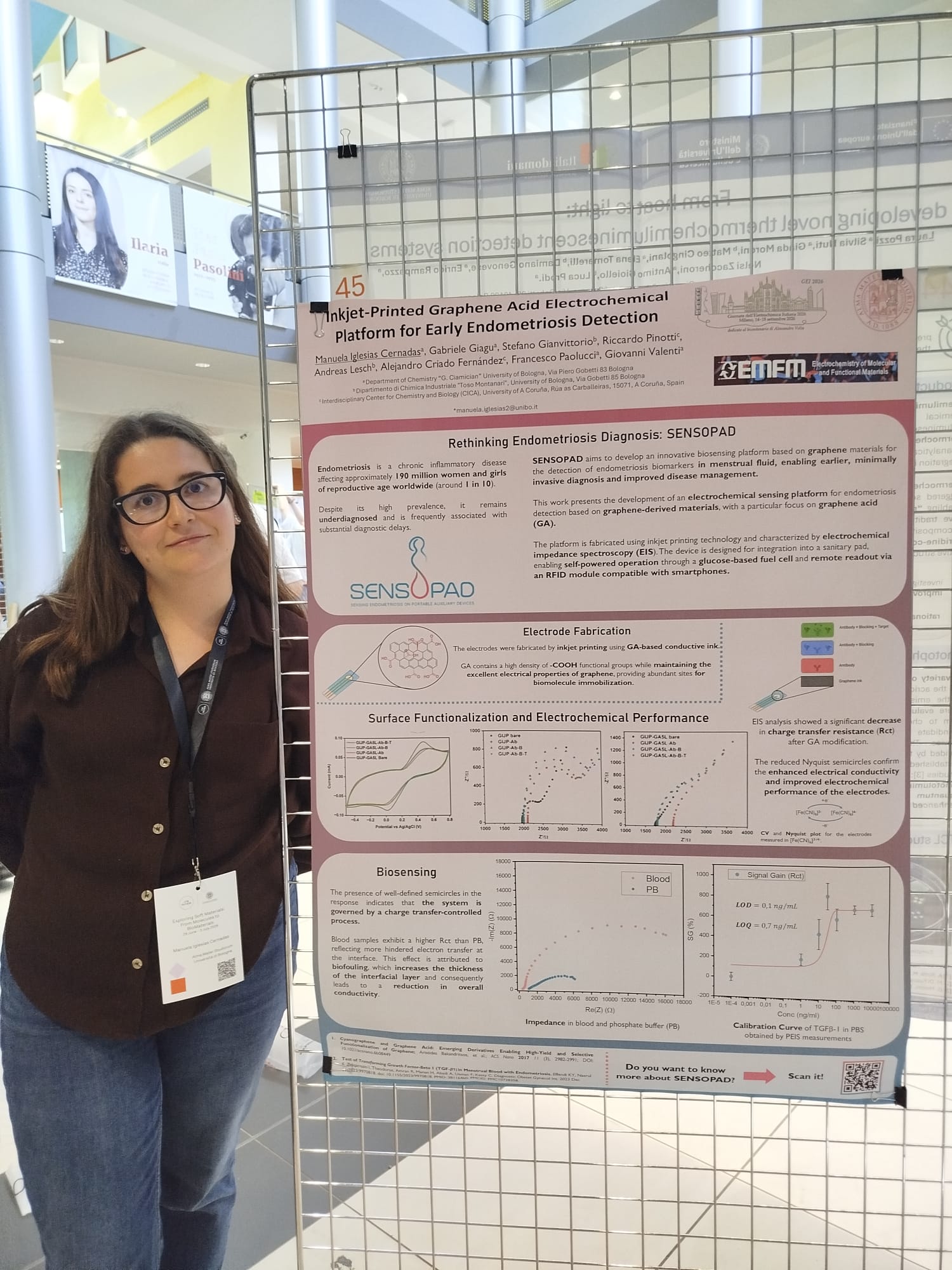
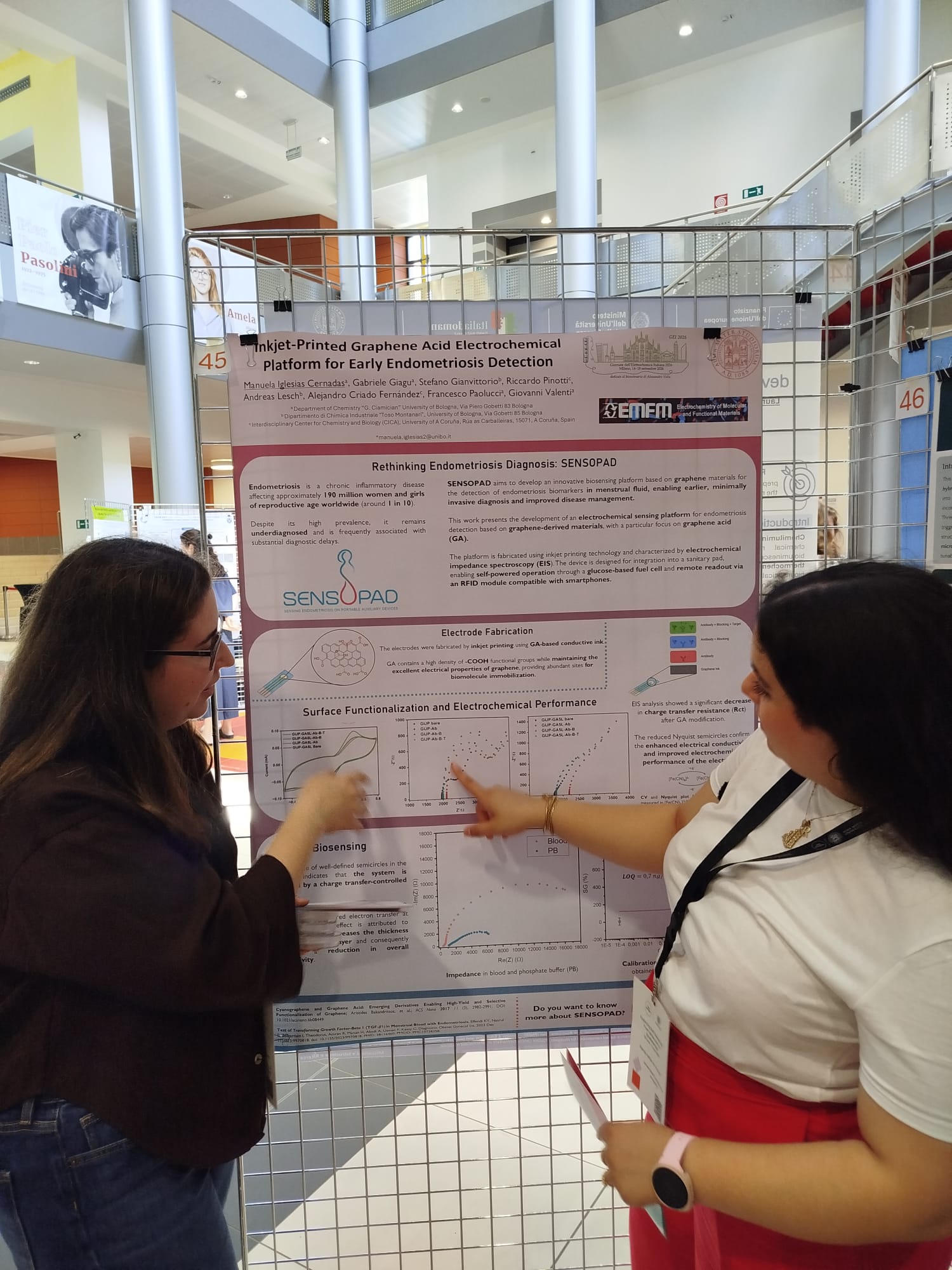
SENSOPAD’s scientific outreach in June also included two poster presentations by Manuela Iglesias Cernadas from UNIBO, showcasing research on the development of an electrochemical sensing platform for endometriosis based on graphene acid (GA) as the electrode material.
The first poster was presented at Navile2Day, held in Bologna on 11 June 2026. The annual event promotes exchange between researchers, students and other actors in the research and innovation community, providing a space for interdisciplinary dialogue and the presentation of ongoing scientific work.
Later in the month, Manuela presented SENSOPAD-related research at the Una Europa Summer School for Doctoral Researchers, “Exploring Soft Materials: From Molecules to Biomaterials”, held in Bologna from 29 June to 3 July 2026. Bringing together doctoral researchers working across soft materials and biomaterials, the summer school explored research spanning molecular-level developments and their application in advanced biomaterials.
Manuela’s contribution was among the recipients of the Best Presentation for Companies distinction, recognising the presentation of the research to industry-oriented audiences and highlighting the relevance of the work beyond the academic research environment.
Through these two poster sessions, SENSOPAD’s research reached interdisciplinary audiences working across chemistry, advanced materials and biomaterials, creating further opportunities to discuss the potential of graphene-based electrochemical sensing for women’s health applications.
From sensing research to reproducible electrode fabrication
Alongside these scientific communication and dissemination activities, UNIBO continues to advance the fabrication processes behind the SENSOPAD sensing platform.
A recent printing test offers a closer look at the screen-printing process used to fabricate the electrodes. The technique enables the reproducible deposition of conductive patterns and represents a key step towards the scalable and cost-effective manufacturing of the sensing platform.
Watch the video to see the electrode screen-printing process in action.
The screen-printing test connects the scientific research presented by the UNIBO team with the practical development of the sensing platform. By combining graphene-based electrode materials with reproducible fabrication techniques, the work contributes to the technological foundations of SENSOPAD’s portable sensing solutions.
From public engagement at Pint of Science to international conference presentations, poster sessions and laboratory fabrication activities, UNIBO’s recent work reflects the different dimensions involved in advancing SENSOPAD’s research.
By connecting scientific exchange, materials research and technological development, SENSOPAD continues to work towards innovative and non-invasive sensing approaches that could support the future detection of endometriosis.